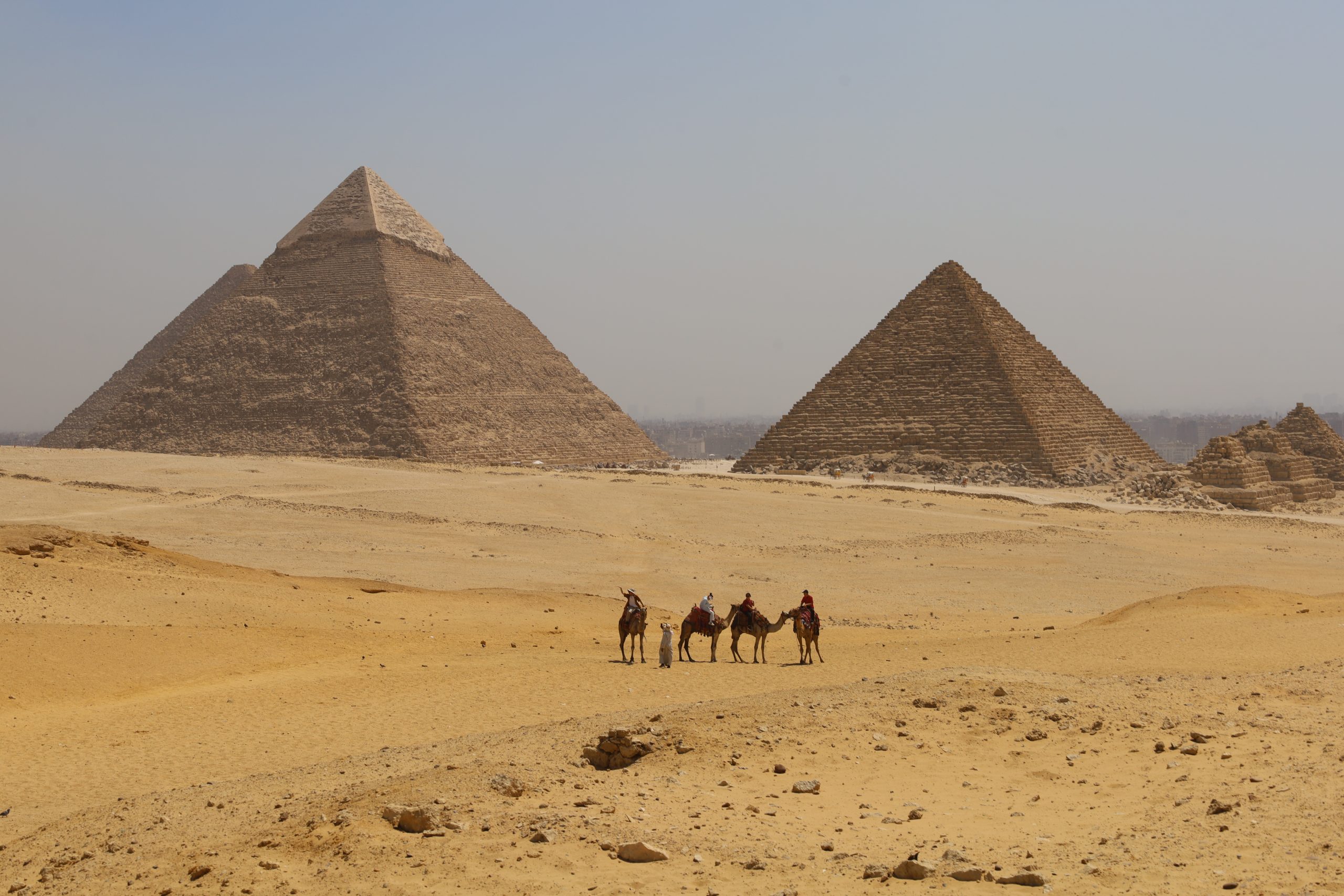
Few civilizations capture the human imagination like ancient Egypt. For over 3,000 years, pharaohs ruled over a sophisticated society that built monuments so impressive they still dominate our bucket lists, created art so beautiful it fills the world’s greatest museums, and left mysteries so compelling we’re still trying to solve them today. The Pyramids of Giza, the only surviving wonder of the ancient world, stand as eternal testimony to human ambition, ingenuity, and the desire to transcend mortality.
But Egypt’s pharaonic legacy extends far beyond the famous pyramids. From the hidden tombs of the Valley of the Kings to the colossal temples of Abu Simbel, from the enigmatic Sphinx to the colorful hieroglyphics adorning temple walls, ancient Egypt offers modern adventurers an unparalleled journey through humanity’s most fascinating chapter.
This guide takes you deep into pharaonic Egypt—revealing not just what to see, but how to truly experience these ancient wonders, understand their significance, and connect with the civilization that created them.
The Pyramids: Egypt’s Eternal Icons
Giza: Where Immortality Became Stone
Standing at the edge of modern Cairo, the Pyramids of Giza have dominated the desert plateau for over 4,500 years. Built during Egypt’s Old Kingdom (around 2580-2560 BCE), these architectural marvels were tombs designed to preserve pharaohs for eternity and launch them into the afterlife.
The Great Pyramid of Khufu (Cheops)
The largest of Giza’s three pyramids, Khufu’s monument originally stood 481 feet tall—taller than the Statue of Liberty. Constructed from approximately 2.3 million limestone blocks averaging 2.5 tons each, it remained the world’s tallest human-made structure for nearly 4,000 years. The precision is staggering: the base forms a nearly perfect square with sides aligned to cardinal directions within fractions of a degree.
For centuries, scholars debated how ancient Egyptians built such monuments without modern technology. While theories range from internal ramps to external spiral ramps to water-powered lifts, the most accepted explanation involves armies of skilled workers (not slaves, as popularly believed) using copper tools, wooden sledges, and ingenious engineering over approximately 20 years.
Visitors can enter the Great Pyramid through the Robbers’ Tunnel, climbing through narrow ascending passages to reach the magnificent Grand Gallery and the King’s Chamber, where Khufu’s empty granite sarcophagus rests. The experience is claustrophobic, hot, and absolutely unforgettable—you’re literally inside one of humanity’s greatest achievements.
The Pyramid of Khafre
Khufu’s son Khafre built the second pyramid at Giza, which appears taller due to its elevated position and steeper angle, though it’s actually slightly smaller. What makes Khafre’s pyramid special is the limestone casing stones still visible at its peak—the only remaining evidence of the smooth, brilliant white limestone that once covered all the pyramids, making them shine like beacons across the desert.
Khafre’s complex includes the best-preserved valley temple and the Great Sphinx, which likely bears his face gazing eternally eastward toward the rising sun.
The Pyramid of Menkaure
The smallest of Giza’s trio (though still massive at 213 feet), Menkaure’s pyramid shows different construction techniques and materials, with some granite casing stones still in place. The associated temples and smaller queens’ pyramids provide insights into changing royal burial practices and religious beliefs.
The Great Sphinx: Guardian of Mysteries
Carved from a single massive limestone outcrop, the Sphinx combines a pharaoh’s head (likely Khafre) with a lion’s body—representing the union of human intelligence and divine power. At 241 feet long and 66 feet high, it’s been watching the desert for 4,500 years, weathered by wind and sand into the enigmatic guardian we see today.
The Sphinx has captivated imaginations for millennia, inspiring countless legends. Medieval Arabs called it “Abu al-Hol” (Father of Terror). Napoleon’s soldiers allegedly shot off its nose (though erosion is the more likely culprit). Between its paws lies the Dream Stele, where pharaoh Thutmose IV recorded a dream in which the Sphinx promised him kingship if he cleared away the encroaching sand.
Beyond Giza: Egypt’s Pyramid Legacy
While Giza dominates popular imagination, Egypt boasts over 100 pyramids scattered across the desert. Each tells part of the evolving story of pharaonic burial practices and architectural innovation.